
Samsung Refrigerator Not Cooling in San Diego? Causes & Repair Guide
Samsung refrigerator not cooling? Learn the 8 most common causes—frozen evaporator coils, defrost failure, compressor—plus Samsung error codes and repair costs in San Diego.
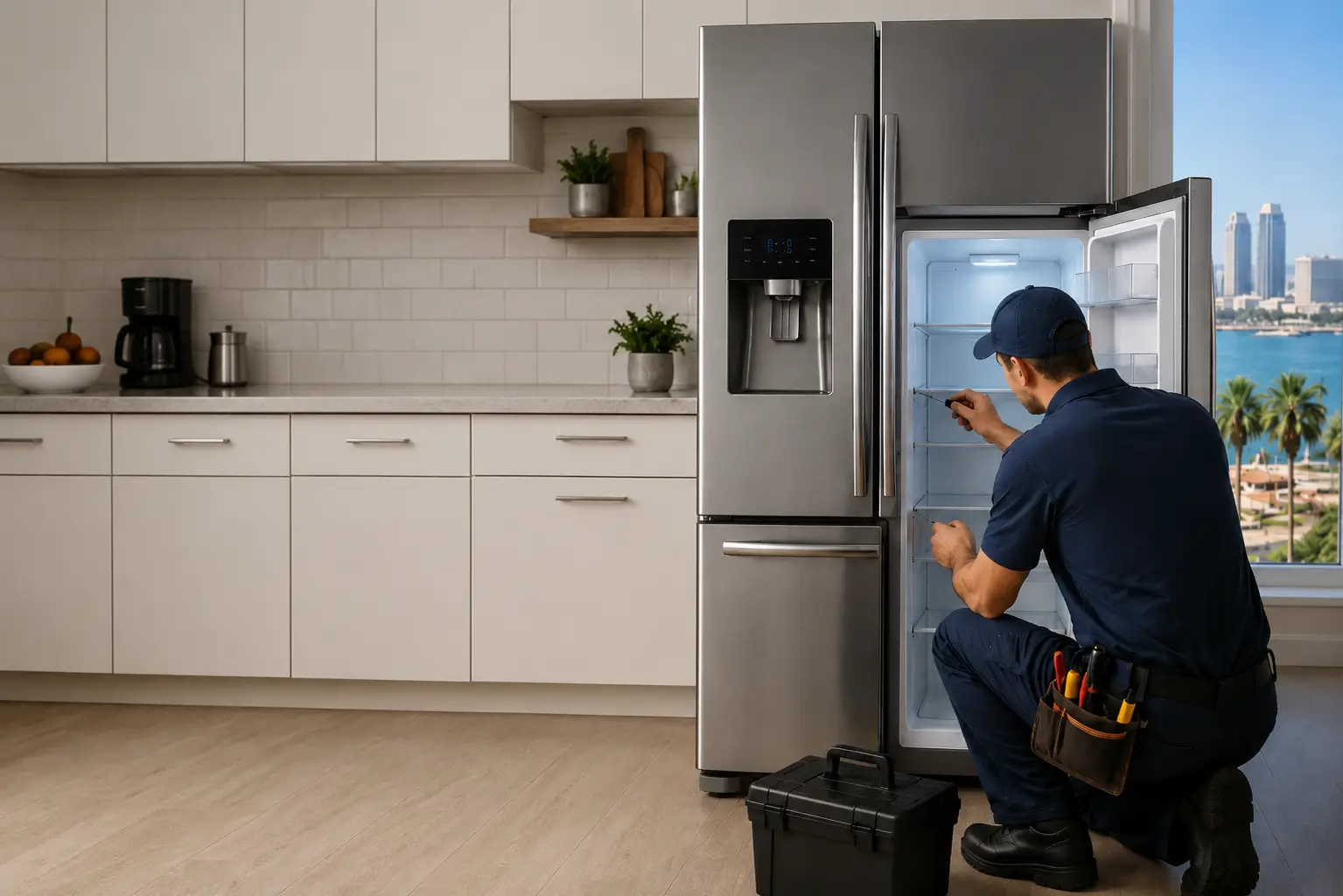
Samsung refrigerators are among the most popular in San Diego homes — but they also have some well-documented cooling issues that owners should know about. If your Samsung fridge is not cooling, not maintaining temperature, or showing an error code, this guide covers every common cause and what to do next.
Whether you have a French door, side-by-side, or bottom-freezer Samsung model, the cooling problems are largely the same. Below are the 8 most common causes, along with Samsung-specific error codes, typical repair costs, and guidance on when to call a professional in San Diego.
1 Why Samsung Refrigerators Stop Cooling
Samsung refrigerators use an inverter compressor system, a dual evaporator setup (on many models), and a smart diagnostic board. While these make Samsung units efficient, they also mean that cooling failures can involve several interconnected components.
The most common pattern with Samsung refrigerators is a defrost system failure that causes ice to build up on the evaporator coils — blocking airflow and stopping the cooling cycle entirely. This is sometimes called the "Samsung ice wall" problem and affects many popular models.
Other causes range from simple (dirty condenser coils, blocked vents) to complex (compressor failure, refrigerant leak). Identifying which system has failed is the first step to getting your refrigerator back to proper temperature.
2 8 Most Common Causes of Samsung Refrigerator Not Cooling
Frozen Evaporator Coils (Most Common in Samsung)
Samsung refrigerators — especially French door models made between 2014 and 2021 — are known for ice building up behind the back panel of the freezer, completely encasing the evaporator coils. When the coils freeze over, airflow is blocked and cooling stops. This is usually caused by a failed defrost heater, defrost thermostat, or defrost control.
Symptoms:
- • Freezer cold but fresh food compartment warm
- • Cooling restores temporarily after unplugging for 24–48 hours
- • Fan running but no cold air reaching fridge section
Defrosting manually is a temporary fix — the defrost system must be repaired to prevent recurrence.
Dirty or Clogged Condenser Coils
The condenser coils on Samsung refrigerators are typically located underneath or at the back of the unit. When they become coated with dust, pet hair, or debris, heat cannot escape — the compressor overworks and cooling efficiency drops significantly.
Symptoms:
- • Fridge feels warm but compressor is running
- • Bottom of refrigerator noticeably hot to the touch
- • Higher-than-normal electricity bills
Samsung recommends cleaning condenser coils every 6–12 months in dusty environments.
Evaporator Fan Motor Failure
The evaporator fan circulates cold air from the freezer coils into both the freezer and fresh food compartments. If the fan motor fails or ice blocks the fan blade, cold air stops circulating and the refrigerator section warms up quickly.
Symptoms:
- • Freezer stays cold but fridge is warm
- • No airflow from interior vents
- • Unusual squealing or clicking noise from freezer wall
Fan motor replacement is a common, straightforward repair for Samsung models.
Defrost System Failure
Samsung's defrost system includes a defrost heater, defrost thermostat (bi-metal thermostat), defrost sensor, and defrost timer or control board logic. When any of these fail, the system cannot melt ice off the evaporator — leading to the frozen coil problem described above.
Symptoms:
- • Fridge and freezer gradually lose cooling over days or weeks
- • Ice visible behind rear freezer panel
- • Cooling temporarily restores after manual defrost
This is the #1 complaint reported by Samsung refrigerator owners. Parts are inexpensive; labor is the main cost.
Compressor Failure
Samsung uses inverter linear compressors in many models. While durable, these compressors can fail — especially in units over 7 years old. A failed compressor means the refrigerant cannot circulate and the appliance loses all cooling.
Symptoms:
- • No cooling in either compartment
- • Compressor not running (no humming sound)
- • Unit trips breaker or runs briefly then stops
Samsung extended its compressor warranty to 10 years on many models — check if yours qualifies before paying for repairs.
Refrigerant Leak
A refrigerant leak in the sealed system means the cooling agent that transfers heat is escaping. Samsung refrigerators are a closed sealed system — refrigerant does not normally need refilling unless there is a leak, which must be located, repaired, and recharged by a certified EPA technician.
Symptoms:
- • Refrigerator runs constantly but never reaches temperature
- • Evaporator coils partially iced (not fully frozen)
- • Oily residue near compressor or copper lines
Sealed system repair requires EPA 608 certification — always use a licensed technician.
Control Board (Main PCB) Failure
Samsung refrigerators rely heavily on electronic control boards to manage defrost cycles, fan speeds, temperature sensors, and compressor operation. A power surge or component failure on the main PCB can disrupt any of these functions and cause cooling problems.
Symptoms:
- • Error codes on display panel
- • Random temperature fluctuations with no clear cause
- • Defrost cycle not running despite functional heater and thermostat
Control board diagnosis requires professional tools — do not replace it without proper diagnosis, as it is expensive.
Worn or Torn Door Gasket
The rubber gasket sealing the refrigerator door prevents warm air from entering. When gaskets crack, warp, or pull away from the door, warm humid air enters constantly — causing the appliance to overwork and struggle to maintain temperature, while also accelerating frost buildup.
Symptoms:
- • Visible gaps or tears in the door seal
- • Frost forming near door edges or hinges
- • Refrigerator runs excessively in warm months
Test by closing the door on a dollar bill — if it slides out easily, the gasket needs replacement.
3 Samsung Refrigerator Error Codes Explained
Samsung refrigerators display error codes on their panel when a fault is detected. Here are the most common codes related to cooling problems:
| Error Code | Meaning | Likely Action Needed |
|---|---|---|
| 5E / SE | Defrost sensor error (freezer) | Replace defrost sensor or defrost assembly |
| 8E | Ice maker sensor error | Replace ice maker sensor or ice maker assembly |
| 22E / 22C | Freezer fan (evaporator fan) error | Replace evaporator fan motor; check for ice obstruction |
| 33E / 33C | Condenser sensor error | Replace condenser temperature sensor |
| 40E / 40C | Ice room temperature sensor error | Replace ice room sensor; check wiring harness |
| PC ER | Communication error between control boards | Inspect wiring; may require main PCB replacement |
| 88 88 / 83E | Power surge reset / communication fault | Unplug for 5 min; if persistent, service board diagnostics needed |
Note: Always write down the error code before unplugging — codes may clear on power cycle but the fault remains.
4 Samsung Refrigerator Repair Costs in San Diego
Repair costs depend on which component has failed. Here are typical ranges for common Samsung refrigerator repairs in San Diego (parts + labor):
| Repair Type | Typical Cost Range | Complexity |
|---|---|---|
| Defrost heater / thermostat replacement | $150 – $280 | Low |
| Evaporator fan motor replacement | $150 – $300 | Low |
| Door gasket replacement | $100 – $200 | Low |
| Temperature sensor replacement | $120 – $220 | Low |
| Control board (PCB) replacement | $300 – $500 | Medium |
| Compressor replacement | $400 – $700+ | High |
| Refrigerant sealed-system repair | $350 – $600+ | High |
Prices are estimates for the San Diego area. Actual costs may vary based on model and parts availability. Contact us for an exact quote.
5 What You Can Safely Check Before Calling
Check the temperature settings
Samsung recommends 37°F (3°C) for the fridge and 0°F (-18°C) for the freezer. Someone may have accidentally changed settings.
Note any error codes on the display
Write down any codes showing on the panel before unplugging. Share them with the technician — this speeds up diagnosis significantly.
Verify airflow — check if vents are blocked
Make sure food is not pressed against the rear vents inside. Leave 1–2 inches of space for airflow around items stored in the fridge.
Check the door gasket
Run your hand along the door seals for gaps or tears. Try the dollar bill test — close the door on a bill and pull; resistance means a good seal, no resistance means the gasket is worn.
Try a manual defrost cycle (power off 24–48 hours)
If your Samsung fridge restores cooling after being unplugged for 24–48 hours, this strongly indicates a defrost system failure — the ice wall problem. Cooling will return temporarily, then fail again unless the defrost system is repaired.
6 When to Call a Samsung Repair Technician
Call a professional technician immediately if you notice any of the following:
- Your Samsung refrigerator is not cooling at all and the compressor is not running
- You see an error code on the display panel (5E, 22E, 33E, PC ER, or similar)
- The refrigerator restores cooling temporarily after unplugging but fails again — defrost repair needed
- You hear grinding, clicking, or loud humming from the compressor area
- The unit is within Samsung's 5-year sealed system warranty or 10-year compressor warranty
- Food has spoiled or temperatures are above 40°F (4°C) for more than 2 hours
Samsung warranty tip: Samsung extended its compressor warranty to 10 years on many inverter compressor models (2013 and newer). Check your model number at Samsung's website before paying for compressor repair. Our technicians can also verify warranty eligibility on-site.
Need Appliance Repair Today?
Call us now for same-day service. Our expert technicians are ready to help!